Chess - antoniomartel.com

Archivos de Autor: antoniomartel

New chapter from book Agile 101: Principles Behind the Agile Manifesto

Nearly 15 years ago, in 2001, 17 software developers met in Utah. They were critical of the then popular software-development models, which they considered rigid or heavy. That meeting included people like Kent Beck, Martin Fowler or the Scrum founders. They had decided to meet in order to talk about the new techniques and processes to develop software.
That meeting gave rise to a number of principles governing the new alternative (and Agile) methods they were proposing: the Principles behind the Agile Manifesto. One of these principles is:

Our highest priority is to satisfy the customer
through early and continuous delivery
of valuable software.

Clearly, this is what should be done in any type of development. We start every project with that in mind, but soon people start getting into a rush. Our director asks how many hours we’ve spent (and we’ve spent a lot already). Our client asks when all the features will be ready. Our workmates ask if they can take that two-week holiday we owe them.

It starts to look ugly. We’re in a mess again. We have to redo the Gantt chart with the new delivery deadlines, we have to look for another set of dates for those holidays (even our own holidays), and we have to give the director loads of explanations. “The client requested lots of changes” “The technology was new.” “We miscalculated.”

Here’s where we should be firm and ask the team for some extra effort, and decline little changes requested by the client. If it isn’t written exactly like that in the contract we signed or the minutes of a meeting we had six months ago, we’re sorry but we can’t do it.

The thing is, clients also did this. They wrote a very clear contract in which they stated each and every feature that they wanted (or the ones they wanted when they drafted it). Maybe they no longer needed those features or had realised that there were other, more important things, but they’re in the contract and they should be done. The project cannot end and leave 30% of undeveloped functionality.

At the moment, we have lost sight of what should be our top priority in our job: early and continuous delivery of valuable software. From here on, there are just tough negotiations and a contract that we would try to fulfil as soon as possible with the least amount of damage possible.

The contract might have tonnes of clauses and stipulations, but regardless of what it says, what the client wanted on signing it was a solution to the problem at hand, not an argument about whether to implement one functionality or another.

But if we deliver our software early and often, we can let clients test it and use it and tell us what they think. We can allow them tell us if there is something missing or what could be improved. They will want us to implement things they find they now need, and they will be delighted in turn to take out that .rpt file-exporting feature that no one remembers requesting or knows why it was requested in the first place.

When we finish the project, the client will have a product that really solves their problems, one that has been evolving while they learned, and one that they have been able to use and test from the early stages of the project. It sounds better for both the provider and the client, right?

New chapter from Antonio Martel's book, Agile 101: Principles Behind the Agile Manifesto
 “How do you
manage a project when you have received no previous training in project
management? Well, by suffering a lot.”
Albert Cubeles

You can find texts like this and many other about how to manage agile projects in my book Agile 101: Practical Project Management (available on Amazon).

Translation by Begoña Martínez. You can also find her on her LinkedIn profile. Proofreading by David Nesbitt.

Agile 101 book

Pretty soon my first book on Agility will be also available in a new English edition. You will be able to find there same contents and same topics that were addressed at the Spanish edition or that you can find here in my blog but ready for English speakers:

  • Scrum pros and cons
  • Agile estimations with Scrum
  • Help and hints to pass your Professional Scrum Master (PSM I) Certification test.
  • Real life projects experience and practical know-how on how to deal with situations that we all have gone through any time in our professional lifes.
I leave you here with the foreword of this brand new edition (translation by Begoña Martínez. You can also find her on her LinkedIn profile. Proofreading by David Nesbitt):

“Extra! Extra! New edition Agile 101. Read all about it”


Your company has just appointed you project manager. You’ve heard about Agile methodologies, Scrum, Kanban, and lots of other things you’d like to try. You’ve started reading all about artifacts, principles, and manifestos, but nothing is crystal clear just yet.

You don’t know whether your lack of knowledge will put your project at risk, but probably what worries you the most is that all these things are nothing but buzzwords, the current fad, and that they won’t have any real effect on your day-to-day work… or even worse, that such a big change in what to call things and how to do them will make your team, your clients, and your company reject those ideas altogether. Luckily for me, or unluckily maybe, I have also gone through all these problems, so in this book I will tell you how I solved them (when I’ve been able to) or, at least, what I tried and what eventually failed.

Don’t expect this document to be an exhaustive Scrum guide. I don’t know everything about Scrum, and the implementation I follow is far from perfect. For a thorough knowledge of Scrum, I recommend following some of the popular Scrum guides that you can find either online or in books like the one by Henrik Kniberg, not to mention the one by Jeff Sutherland, creator of Scrum.

Even though I follow a survival Scrum style and I still have lots to improve, Scrum has worked for me. Using it, we have managed to gain credibility in difficult projects, projects that were not working the way we expected. We managed to reduce the amount of stressful situations that, luckily, now happen far less often, and we have increased the satisfaction of the clients who, sprint after sprint, get their money’s worth. We have not been able to follow Scrum methodologies to the letter in every project we have worked on, but just trying to be more Agile we have improved our results in the projects we are working on.

When we start using Scrum, we all tend to use the terminology of this framework, talking about daily sprint meetings, product backlogs or burndown charts. We follow our Scrum guides to a tee, when in fact no one understands them, not even ourselves. Not understanding the spirit behind these rules, we end up creating a waterfall project—like we always have done—disguised by jargon that makes us look more innovative.

Rather than telling you how to do things, or explaining in detail how many meetings you should have and how many minutes each one should last, in this book I want to describe what the purpose is behind those meetings, what the artifacts described in Scrum guides are for, and what you might get out of them. I’ll help you understand the Agile principles that underlie this way of working and that really make this work. I hope you find this book very useful!

You can find texts like this and many other about how to manage agile projects in my book Agile 101: Practical Project Management (available on Amazon).

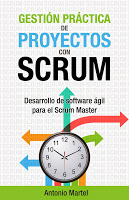
Ya a la venta la tercera edición del libro Gestión práctica de proyectos

En unas horas Amazon tendrá a la venta la tercera edición del libro Gestión Práctica de Proyectos con Scrum. Esta edición tiene aproximadamente un 25% más de contenidos sobre la gestión ágil de proyectos y experiencias reales en proyectos probablemente muy similares a los que tú te vas a enfrentar.

Si ya tienes el libro en formato Kindle y quieres recibir una actualización sólo tienes que loguearte en Amazon y desde allí pulsar en la opción ‘Gestionar mi Kindle‘ para que los nuevos contenidos se actualicen automáticamente.

Si, en cambio, quieres comprar el libro, no necesitas un lector Kindle o descargarte una aplicación. Basta un PC o portátil con Internet y desde ahí acceder a read.amazon.com. En esa página web podrás acceder a todos los ebook que hayas comprado en Amazon.

Puedes comprar el libro en Amazon.com, Amazon España y Amazon México. Esta nueva edición estará también pronto, en aproximadamente una semana, disponible en Google Play si decides comprarlo en esa tienda online desde tu móvil o tablet Android.

Preguntas de examen PMP con QuizPM

Si estás pensando en obtener la certificación PMP de gestión de proyectos y buscas preguntas y tests para practicar o un simulador del examen en español, échale un vistazo a la nueva web QuizPM.

Ahí vas a encontrar varios modos de examen con una base de datos de más de 1.500 preguntas similares a las que encontrarás en el examen oficial:

  • Modo Personalizado, para los que están empezando a asimilar los conceptos del BOK de PMP.
  • Modo Inteligente, donde el sistema, basándose en tu historial, te propone preguntas sobre aquellas áreas de conocimiento en las que tienes peor porcentaje de aciertos.
  • Modo Examen, para los que ya se sienten preparados para el examen real y quieren hacer una simulación lo más parecida a la realidad posible: 200 preguntas a resolver en cuatro horas con 72 segundos para responder cada una.
  • Test de prueba: Un test de 50 preguntas en el que podrás probar el simulador de forma gratuita y valorar si estás preparado ya o si quieres continuar y suscribirte para hacer tests con baterías de preguntas más grandes.
Me ha sorprendido mucho la cantidad de funcionalidades y ayudas para practicar los tests que tienes. En todo momento tienes a tu izquierda el número de preguntas que ya has resuelto, el número de minutos y segundos que te quedan para acabar pero también puedes guardar el test para continuar en otro momento y, si minimizas la pantalla o pones el foco en otra ventana, QuizPM entra automáticamente en pausa para que puedas continuar más adelante sin perder tiempo para el examen.
También me ha sorprendido el agradable diseño gráfico y lo fácil e intuitivo que es de entender tu historial de aciertos o cómo grabar y recuperar el estado del último test que estabas realizando. La web tiene un diseño responsive que te permitirá hacer los tests desde tu móvil de una forma muy cómoda y clara: no hay letras pequeñas y se adapta a varios tipos de pantalla y giros con el móvil.
No sólo está en español sino que puedes ver también las preguntas en inglés para la traducción exacta de ciertos términos del BOK de PMP. Esto es importante si vas a realizar el test fuera y lo tienes que realizar en inglés pero los libros que has leído han sido siempre en español.
Les dejo con algunas imágenes de la aplicación:


Tercera edición del libro Gestión práctica de proyectos con Scrum

En unas semanas estará disponible en Amazon, en su versión ebook, la tercera edición del libro Gestión práctica de proyectos con Scrum.

Más de 25 nuevas páginas de contenidos que incluyen más información sobre cómo hacer estimaciones ágiles, lecciones aprendidas en el trabajo diario, los principios y valores detrás del movimiento ágil o qué hacer con los requisitos que cambian durante el proyecto.

Si has comprado el libro ya, pásate de nuevo por la página de Amazon, que deberás recibir una actualización de contenidos automática cuando la tercera edición esté ya publicada. Deberás entrar con tu usuario en la página, ir a Gestionar mi Kindle, seleccionar este libro y actualizar los contenidos.

Si quieres leer el libro y no tienes un lector Kindle o no quieres descargarte la aplicación para tu PC, móvil o tablet, siempre puedes leer el libro yendo a la página read.amazon.com. Allí, con la cuenta de correo con la que compraste el libro, podrás leer cualquier ebook que hayas comprado en Amazon, aunque no tengas un lector Kindle.

Aquí tienes también los accesos al libro en los tres Amazon donde puedes comprarlo (también está disponible en Google Play)

Amazon.com
Amazon.es
Amazon.com.mx